
 0466 120 139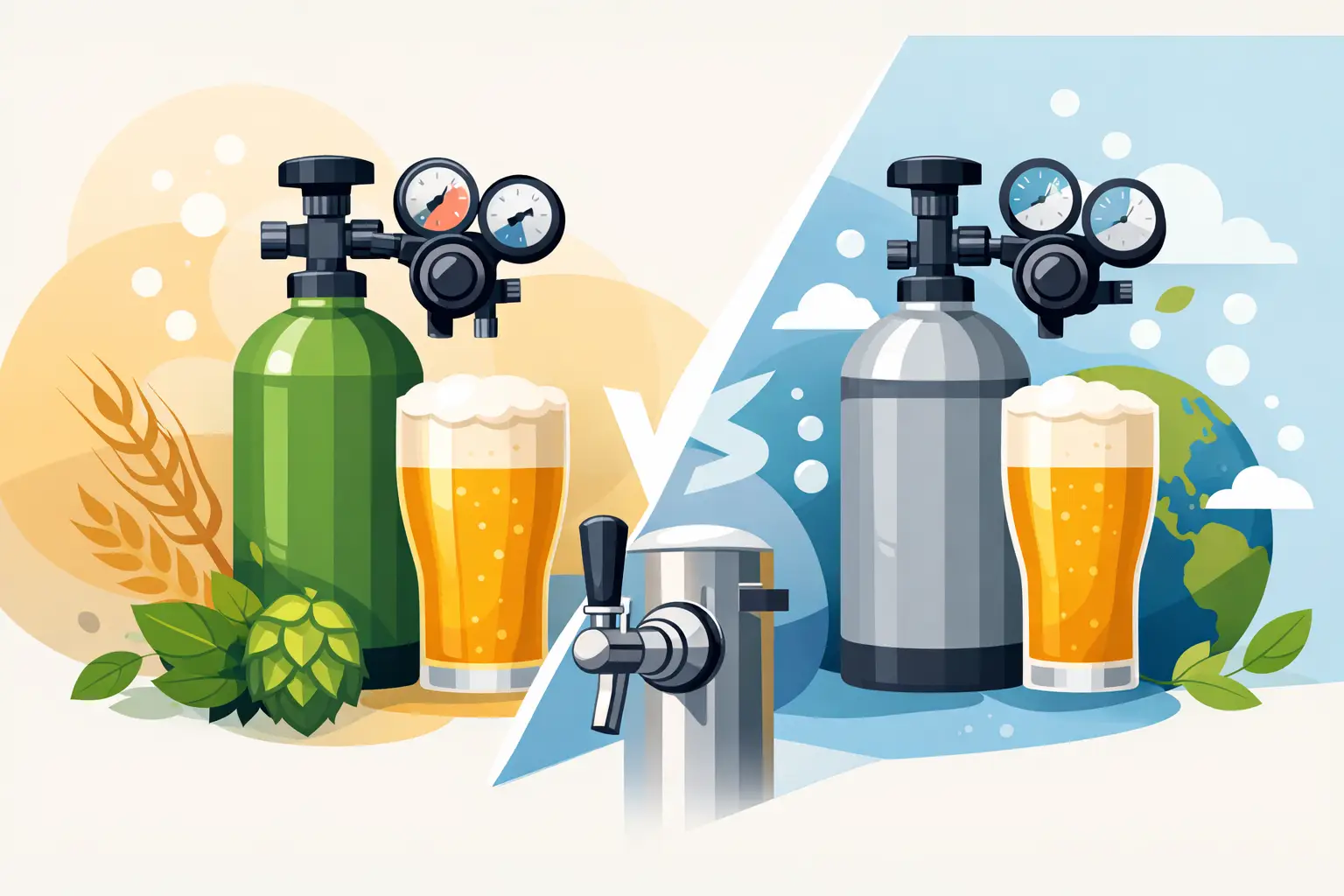
You notice it first in the glass. One pint lands with a tight, creamy head and a soft, velvety mouthfeel. Another pours brighter, sharper and more lively. When people compare beer gas vs CO2, they are really talking about how a keg behaves from the bottle to the tap – and how that changes what ends up in your hand.
For home kegerators, party setups and small venues, the right gas is not just a technical detail. It affects carbonation, serving pressure, pour speed, foam control and the overall drinking experience. If you are choosing between the two, the short answer is simple: most beers and ciders run best on straight CO2, while beer gas is usually the better fit for stout and a few specialty pours. The longer answer is where it gets useful.
CO2 is carbon dioxide. In draught systems, it does two jobs at once. It pushes the beer from the keg to the tap, and it dissolves into the liquid to create and maintain carbonation. That makes it the standard choice for most lagers, pale ales, IPAs, sparkling ciders and soft drinks.
Beer gas is a blend of nitrogen and CO2. The exact mix can vary, but a common blend is around 70 per cent nitrogen and 30 per cent CO2. Nitrogen behaves very differently to carbon dioxide. It is far less soluble in beer, which means it does not add much carbonation. Instead, it allows you to serve at higher pressure without overcarbonating the keg.
That higher serving pressure is what helps create the dense, cascading head you see on stout taps. It also changes the texture of the beer, giving it a smoother, creamier feel. That can be brilliant for the right style and completely wrong for the wrong one.
If you have a home keg fridge, a party keg or a standard draught setup, CO2 is usually the starting point because it is flexible and predictable. It keeps beer carbonated the way most drinkers expect. You can dial pressure up or down to suit the style, line length and temperature, and once it is balanced properly, it gives a clean, consistent pour.
For highly carbonated drinks, CO2 is the clear winner. Cider, soda water and most lighter beer styles need that sharper lift. A pilsner served on beer gas can taste flat or muted. A bright pale ale can lose some of its snap. If you want a lively bead and crisp finish, nitrogen is not doing you any favours.
CO2 also keeps things simpler. Most standard regulators, gas bottles and draught systems are set up around it. For plenty of home users, especially those just getting into kegging, straight CO2 means fewer variables and fewer headaches.
Beer gas comes into its own when you want texture as much as carbonation. Stouts are the obvious example. A dry stout or creamy dark ale served with nitrogen blend develops that signature tight head and smooth body that straight CO2 cannot really match.
This is not just about looks, although the cascading pour certainly helps. Nitrogen softens the perception of bitterness and gives the beer a fuller, silkier finish. That can suit darker styles that are built for that kind of service.
Some brewers and venues also use beer gas for certain smooth ales or coffee-forward specialty beers where a creamier presentation is part of the point. But this is where a bit of caution matters. Beer gas is not a magic upgrade. On many beers, it can suppress aroma, dull carbonation and make the beer feel less expressive than the brewer intended.
For most home setups on the Gold Coast and beyond, CO2 is still the practical choice. It is easier to manage, works across more drink styles and suits mixed households better. If one keg is pale ale, the next is cider and the one after that is a lager, CO2 covers all three without needing a specialised tap or a second gas arrangement.
Beer gas starts to make more sense if you are committed to serving stout properly and you have the right hardware. That usually means a stout tap as well as the gas blend itself. Without the right tap setup, you will not get the full effect, and the result can be underwhelming.
There is also the question of how many kegs you run. If you only have one tap and you like variety, beer gas can be limiting. If you have a multi-tap system and one line is dedicated to stout, then it becomes a much more sensible option.
A lot of pouring problems get blamed on the beer, when the issue is really system balance. Gas pressure, line length, temperature and faucet type all work together. Change one part and the whole system can behave differently.
With straight CO2, lower serving pressures are common because the gas dissolves readily into the beer. If the pressure is too high for the style and setup, the beer can overcarbonate and pour foamy. If it is too low, the beer can lose condition over time.
With beer gas, you can use higher pressure because most of the nitrogen will not absorb into the liquid in the same way. That extra push helps move beer through long lines and through stout taps, where restriction is part of the design. But again, if the system is not built for it, higher pressure alone will not improve the pour.
This is where practical support matters. A good gas bottle and regulator are only part of the story. The right advice on balancing the setup often saves more grief than swapping parts at random.
The biggest difference between beer gas and CO2 is not what happens in the bottle. It is what you notice while drinking.
CO2 gives a beer brightness. You get more bite on the tongue, more lift through the palate and often a stronger expression of hop character and acidity. That is ideal for refreshing styles. It helps lagers feel crisp and ciders feel lively.
Beer gas softens all of that. The bubbles are finer, the head is denser and the mouthfeel feels rounder. That can make a stout seem richer and more polished. It can also make a hop-forward beer seem flatter and less aromatic.
Neither is automatically better. It depends on the style and the result you want. If you are chasing freshness and drinkability in a pale, cold beer on a hot afternoon, CO2 usually wins. If you want a proper pub-style stout experience, beer gas is hard to beat.
For many people, the decision comes down to everyday practicality. CO2 is easier to source, easier to understand and more widely used across standard equipment. If your setup serves different drinks across the year, it is the more economical and versatile option.
Beer gas can add cost and complexity. You may need a different regulator arrangement, a stout tap and a clear plan for what you are serving. If you only pour stout now and then, that extra effort may not stack up.
On the other hand, if stout is your go-to and you care about serving it properly, beer gas can be worth every bit of the extra setup. This is one of those rare cases where the gear really does shape the final product.
If you want one answer that suits most homes, parties and mixed keg setups, use CO2. It is the right fit for the majority of beers and ciders, it keeps things straightforward, and it delivers the carbonation most people expect.
If you are serving stout and want that creamy pub-style pour, use beer gas – but only if the rest of the system is set up for it. The gas blend on its own will not create the result people are picturing.
At Aardvark & Arrow Brewery, we see this question come up all the time with home users and event setups. Usually, once people match the gas to the drink and get the pressure sorted, the whole system becomes easier to live with.
The best gas is the one that suits the beer you actually drink, not the one that sounds more advanced. Start there, and your next pour has a much better chance of being spot on.