
 0466 120 139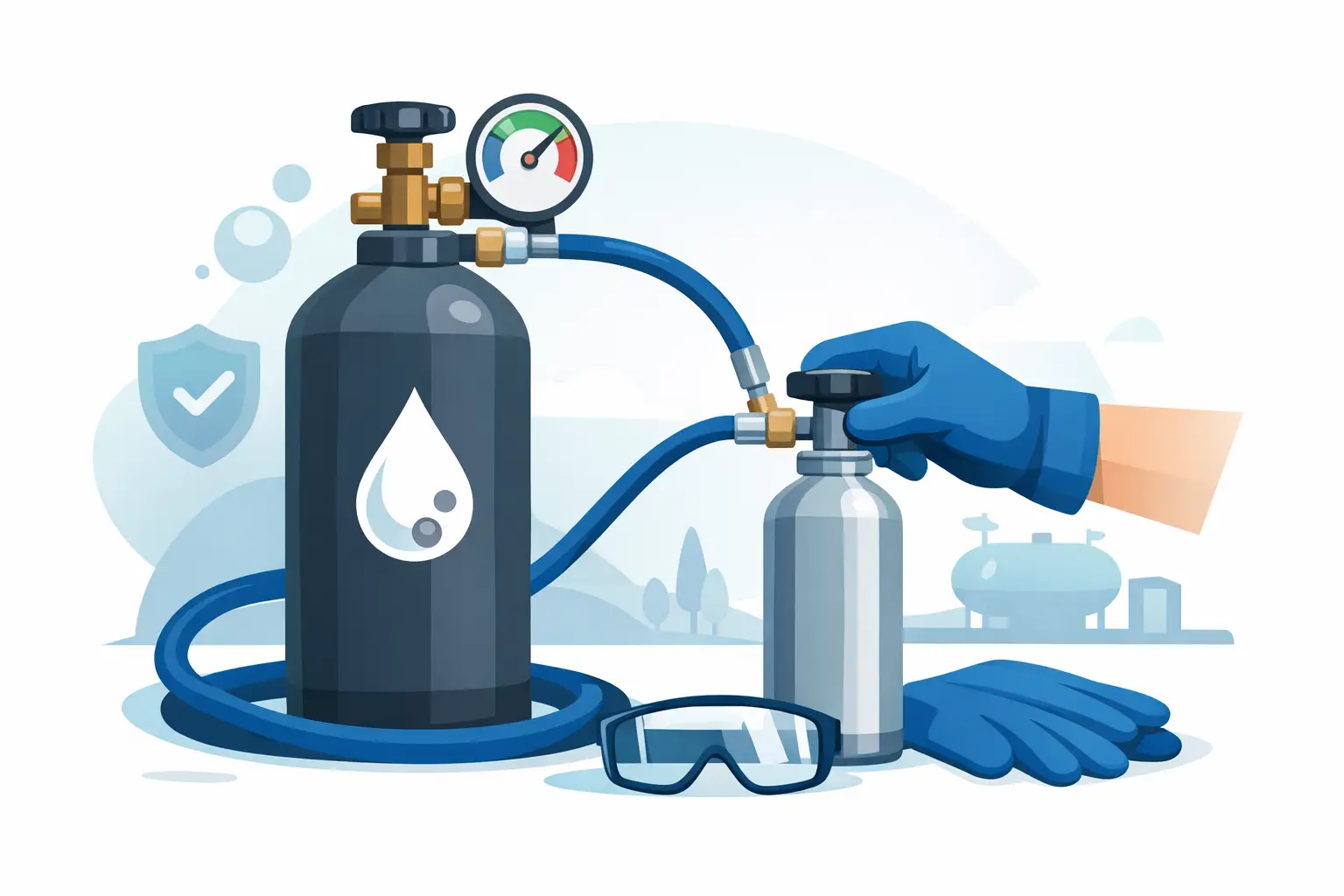
If your keg’s pouring foam, the pressure’s dropped off, or the regulator’s reading next to nothing before a weekend get-together, you usually end up asking the same thing: how to refill CO2 bottle setups properly without wasting time or taking risks. Fair question. CO2 is straightforward when the bottle is in good nick and handled properly, but it’s not a job for guesswork.
For most home users, the short answer is this: you generally do not refill a CO2 bottle yourself from scratch. You take it to a proper refill or swap service, where the bottle is inspected, filled by weight, and returned ready to use. That keeps things safer, keeps your system running properly, and saves the headache of dealing with the wrong fittings, overfilling, or an out-of-test cylinder.
The safest and most practical way to refill a CO2 bottle is through a licensed petrol supplier or a beverage petrol service that handles cylinders for kegerators, home bars and brewing setups. In many cases, what people call a refill is actually a bottle swap. You bring in your empty bottle and receive a full tested one of the same size.
That swap model is common for a reason. It is quicker, and the bottle has usually already been checked for valve condition, external damage and test date. If you are running a home keg system, that often makes more sense than waiting for your exact bottle to be filled.
A true refill, where your own bottle is filled and returned to you, can still be available depending on the supplier and bottle type. Whether swap or refill is better comes down to turnaround time, bottle ownership, test status and how attached you are to keeping the same cylinder.
People sometimes look up how to refill CO2 bottle units at home because they have seen adaptor kits or transfer setups online. Technically, liquid CO2 can be transferred between cylinders under the right conditions. Practically, that does not make it a smart option for most households.
The main problem is that CO2 is stored under high pressure, and it needs to be filled by weight, not by guesswork. A bottle that looks half empty can still hold significant pressure. Overfilling leaves no room for expansion, which creates a real safety issue. Underfilling is safer, but you are still left with the risk of leaks, damaged valves or using equipment that is not matched correctly.
There is also the legal and compliance side. Petrol cylinders in Australia need to be in test and in serviceable condition. If a bottle is rusty, dented, missing markings or overdue for testing, a reputable filler should not put it back into use until that is sorted.
Before heading out, give the bottle a quick once-over. You do not need to be a petrol tech to spot the basics.
Check the test date stamped on the cylinder. If it is out of date, the bottle may need hydrostatic testing before it can be legally refilled. Look over the body for deep rust, major dents, gouges or signs of heat damage. Make sure the valve is intact and the bottle still has a clear identification marking for its petrol type and capacity.
If the bottle has been sitting around in a shed for years, don’t assume it is good to go just because it still has pressure in it. Old cylinders can have valve issues or fail inspection even if they seem fine from a distance.
It also helps to know your bottle size. Common home draft setups use smaller cylinders, but capacities vary. Taking the correct details with you saves back-and-forth and helps make sure you get the right refill or swap for your system.
For most home users, a swap is the easiest option. It is fast, there is no waiting around, and you are less likely to be caught short before a party or a brew day. If your kegerator is a practical setup rather than a showpiece, a swap is usually the no-fuss answer.
A refill of your own bottle can make sense if the bottle is a specific size, has a particular mounting arrangement, or you simply want to keep the same cylinder. Some users also prefer to keep their own bottle if it fits neatly into a home bar cabinet or compact kegerator where dimensions matter.
The trade-off is time. Not every supplier fills on the spot, and not every bottle is accepted automatically. If the cylinder is out of test, damaged or from an unsupported type, you may need extra steps before it can be filled.
A professional refill is more controlled than many people expect. The bottle is not just hooked up and topped off until a pressure gauge looks right.
First, the cylinder is identified and inspected. The filler checks test date, general condition, valve state and bottle specifications. Then the bottle is filled to the correct net weight for that cylinder. Weight matters because CO2 inside the bottle is partly liquid, not just compressed petrol. Pressure alone does not tell you whether the fill is correct.
After filling, the bottle is checked again and prepared for collection or return to service. If it is a swap, all of that has usually happened before the full bottle reaches the shelf.
That process is one reason professional filling gives better results. You get a bottle that performs properly and is far less likely to cause issues with your regulator or dispensing setup.
A lot of CO2 problems show up after the refill, but the refill itself is not always the culprit. Often it is the setup.
One common mistake is blaming an empty bottle when the real issue is a slow leak. A worn nylon washer, loose connection or tired regulator seal can empty a bottle far quicker than expected. If you are refilling more often than usual, inspect the whole petrol side of the system before assuming you simply need more CO2.
Another issue is using the wrong bottle for the application. Beverage-grade systems should use suitable CO2 cylinders and fittings intended for drink dispensing. Trying to make an odd bottle work with adaptors and mixed hardware can turn into a fiddly, unreliable mess.
Storage matters too. Keep bottles upright and secured during transport. Don’t leave them rolling around in the boot, and don’t store them in extreme heat. A proper cylinder is tough, but that is no reason to treat it carelessly.
That depends on bottle size, serving pressure, leak-free connections and how often you are pouring. A home user with a tidy kegerator setup and no leaks can get a good run from a cylinder. On the other hand, one small leak can flatten expectations quickly.
If your bottle seems to run out unusually fast, check all petrol connections with a leak detection spray or soapy water solution around the fittings while the system is pressurised. Bubbles will usually point you to the problem. Do this carefully and keep moisture away from parts that should stay dry internally.
Fast petrol loss can also come from frequent pressure changes, force-carbonating often, or serving multiple kegs from one bottle. There is no single magic timeframe that fits every setup.
Sometimes the better move is not asking how to refill CO2 bottle units, but whether that bottle is worth keeping in service. If it is badly corroded, damaged, out of date and not economical to test, replacement may be the smarter option.
The same goes for bottles with awkward fittings or unknown history. If you picked one up second-hand and cannot confirm what it is, when it was tested, or whether it suits beverage use, it may cost less and save more hassle to start fresh with a known, compatible cylinder.
For people running home bars, party gear or brewery equipment, reliability matters more than squeezing one more cycle out of a questionable bottle.
A good refill service should be able to tell you plainly whether your bottle can be filled, swapped, tested or replaced. That matters because every setup is a bit different. A home brewer with a keezer, someone pouring commercial-style taps in a rumpus room, and an event host using hired gear do not always need the same solution.
If you are on the Gold Coast and dealing with kegerators, petrol bottles, regulators or home dispensing gear, working with someone who understands beverage systems makes life easier. Aardvark & Arrow Brewery handles the practical side of draft service, so you are not left trying to piece together advice from general petrol suppliers who may not know your setup.
The best approach is usually the simplest one: use a properly tested bottle, get it filled or swapped by people who do it every day, and keep your petrol system in good condition between refills. That way, when it is time to pour a beer or cider, the only surprise is how fast the keg disappears.